


Unveiling the Secrets of the Valley of the Kings | Amaken Tours
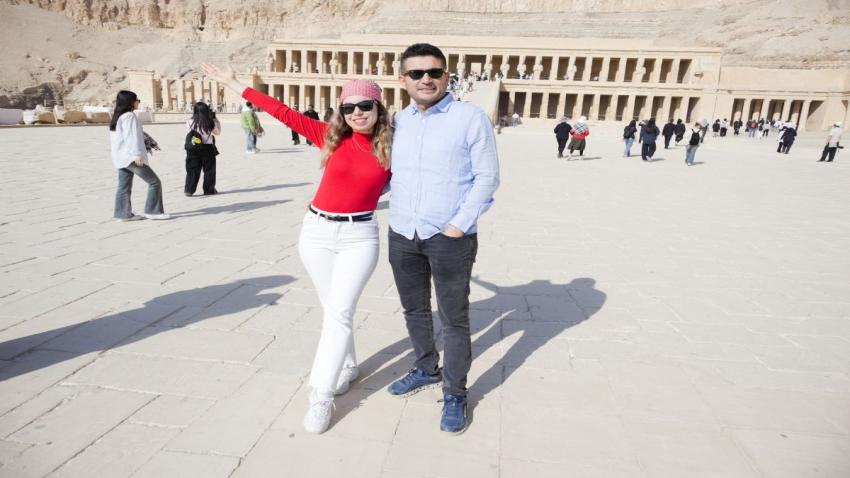
The Symbolism of the West Bank
The location for this grand royal necropolis was not chosen by chance. To the ancient Egyptians, the western horizon held profound spiritual significance. They believed that the sun god descended (or died) in the west each evening, only to rejuvenate and be reborn in the east at dawn. Because of this powerful association with death and rebirth, ancient Egyptian tombs were traditionally placed on the west bank of the Nile. Today, exploring this symbolic landscape is the highlight of all Luxor day tours.
A Natural Pyramid and The Lady of the West
The New Kingdom pharaohs were buried deep beneath a towering, naturally pyramid-shaped cliff that crowns the valley, known today as Al-Qurn. The choice of this specific valley was deeply intentional. The pyramid shape had long been a symbol of resurrection, eternal life, and divine connection. The ancient Egyptians believed this sacred peak and the valley below were guarded by Hathor, the revered goddess known as "The Lady of the West."
Secrecy and Survival: Why Underground Tombs?
The secluded nature of this desert canyon was the primary reason it was chosen as the ultimate royal resting place. The grand, highly visible pyramids of the Old and Middle Kingdoms had fallen victim to tomb robbers in antiquity. To avoid the same fate, the New Kingdom rulers opted for hidden, subterranean tombs carved directly into the rock.
The first confirmed ruler to be buried in this secret valley was Tuthmosis I (circa 1504-1492 BC), the third king of the Eighteenth Dynasty. The extreme secrecy of the project was famously documented by Ineni, his chief architect, who wrote: "I supervised the excavation of the cliff tomb of His Majesty, alone, no one seeing, no one hearing."
Exploring the Valley Today
The Valley of the Kings is geographically divided into two main sections:
The Eastern Valley: This is the most famous and accessible section, where the vast majority of the royal tombs, including that of Tutankhamun, are located.
The Western Valley: A quieter, more remote area containing only a few, yet highly significant, tombs.
In total, the Valley of the Kings contains over 60 discovered tombs, alongside 20 unfinished pits, offering an endless maze of history for travelers embarking on Egypt day tours.
Ready to unravel the mysteries of the pharaohs?
Book your journey with Amaken Tours today and step back in time to experience the unparalleled grandeur of ancient Egyptian civilization!
The location for this grand royal necropolis was not chosen by chance. To the ancient Egyptians, the western horizon held profound spiritual significance. They believed that the sun god descended (or died) in the west each evening, only to rejuvenate and be reborn in the east at dawn. Because of this powerful association with death and rebirth, ancient Egyptian tombs were traditionally placed on the west bank of the Nile. Today, exploring this symbolic landscape is the highlight of all Luxor day tours.
A Natural Pyramid and The Lady of the West
The New Kingdom pharaohs were buried deep beneath a towering, naturally pyramid-shaped cliff that crowns the valley, known today as Al-Qurn. The choice of this specific valley was deeply intentional. The pyramid shape had long been a symbol of resurrection, eternal life, and divine connection. The ancient Egyptians believed this sacred peak and the valley below were guarded by Hathor, the revered goddess known as "The Lady of the West."
Secrecy and Survival: Why Underground Tombs?
The secluded nature of this desert canyon was the primary reason it was chosen as the ultimate royal resting place. The grand, highly visible pyramids of the Old and Middle Kingdoms had fallen victim to tomb robbers in antiquity. To avoid the same fate, the New Kingdom rulers opted for hidden, subterranean tombs carved directly into the rock.
The first confirmed ruler to be buried in this secret valley was Tuthmosis I (circa 1504-1492 BC), the third king of the Eighteenth Dynasty. The extreme secrecy of the project was famously documented by Ineni, his chief architect, who wrote: "I supervised the excavation of the cliff tomb of His Majesty, alone, no one seeing, no one hearing."
Exploring the Valley Today
The Valley of the Kings is geographically divided into two main sections:
The Eastern Valley: This is the most famous and accessible section, where the vast majority of the royal tombs, including that of Tutankhamun, are located.
The Western Valley: A quieter, more remote area containing only a few, yet highly significant, tombs.
In total, the Valley of the Kings contains over 60 discovered tombs, alongside 20 unfinished pits, offering an endless maze of history for travelers embarking on Egypt day tours.
Ready to unravel the mysteries of the pharaohs?
Book your journey with Amaken Tours today and step back in time to experience the unparalleled grandeur of ancient Egyptian civilization!
Our Popular Tours

Blog and Travel Guides
Explore the World through Informative Articles and Personal Stories
Discover the Magic: Top Things to Do in Dahab | Amaken Tours
Dahab, a mesmerizing coastal town on the southeast coast of the Sinai Peninsula, is rapidly becoming the crown jewel of...
King Ramses II: The Legend of Egypt’s Greatest Pharaoh
Known as "Ramses the Great," he was the third pharaoh of the Nineteenth Dynasty and is often regarded as the...

Is It Safe to Travel to Egypt Now? The Ultimate 2026 Tourist Safety Guide
When planning a dream vacation to see the Pyramids or cruise the Nile, it is completely natural to look at...

Red Sea Vibes: The Best of Nightlife & Shopping in Sharm & Hurghada
Sun, Sea, and City Lights
Best Egypt Tours 2026 / 2027 for UK, USA & Europe Travelers
Searching for the best Egypt tours 2026 / 2027 from the UK, USA, or Europe? Experience the wonders of ancient...
Top Things to Do at the Giza Pyramids
Top Things to Do at the Giza Pyramids